

Why Are My Dog's Back Legs Weak? Causes, When to Worry and How to Help

In short
- Weak, wobbly or stiff back legs are one of the most common things dog owners notice, especially as their dog gets older.
- The usual causes are arthritis, a knee problem (cruciate or luxating patella), hip dysplasia, a back problem such as IVDD, or muscle loss with age.
- Sudden weakness, dragging the back legs or losing bladder control is an emergency. See a vet the same day.
- For slower changes, a vet check gives you a diagnosis, and a calm daily routine at home makes a real difference to comfort.
- Our Frenchie Mila's left back leg has a grade 4 luxating patella and a snapped cruciate ligament, so this one is personal.
"Why are my dog's back legs weak?" is a question we hear from customers all the time, and one we have asked ourselves about Mila. Her left back leg has a grade 4 luxating patella and a snapped cruciate ligament, and she has arthritis too, so we know how worrying it is to watch your dog wobble, slip or hesitate at the stairs.
This guide walks through the common causes, the signs that mean go to the vet today, and the practical things that help at home. We are dog owners, not vets, so a diagnosis always comes from your vet.
Go to a vet or emergency vet the same day if:
- The weakness came on suddenly, over hours or a day
- Your dog is dragging their back legs, knuckling their paws or cannot stand
- They have lost control of their bladder or bowels
- They are crying out, trembling or hunched with a tense back
Shop the red light rangeFind the right fit
The most common causes
| Cause | What it often looks like | Read more |
|---|---|---|
| Arthritis | Stiff after rest, slow on the stairs, better once moving. Gradual, over months. | More on arthritis |
| Cruciate ligament injury | Sudden limp or toe-touching on one back leg, sitting with that leg kicked out. | More on cruciate injuries |
| Luxating patella | Skipping or hopping for a few strides, then carrying on as normal. Common in small breeds. | More on luxating patella |
| Hip dysplasia | Bunny hopping, a swaying back end, stiffness getting up. Often larger breeds. | More on hip dysplasia |
| Back problems such as IVDD | Wobbly or weak back legs, a hunched back, yelping when picked up. Can be sudden. | More on IVDD |
| Muscle loss with age | Thinner back legs, tiring sooner on walks, slipping on smooth floors. | See home tips below |
Some less common nerve and spinal conditions can also cause slowly worsening weakness, which is another reason a vet check matters rather than guessing.
How common are these problems?
Very common. In UK vet records, around 2.5% of dogs are diagnosed with limb arthritis every year, roughly 200,000 dogs, and researchers think the real figure is higher because early signs are easy to miss.[1] About 1 in 77 dogs has a diagnosed luxating patella[2] and about 1 in 180 a cruciate problem.[3] In Dachshunds, around 1 in 6 have had an IVDD episode.[4] Many dogs, like Mila, have more than one of these going on at once.
What your vet will do
Your vet will watch your dog walk, feel each joint and check their reflexes and how they place their paws. X-rays are common, and for suspected back problems they may suggest a scan. Taking a short video of your dog walking, getting up and on the stairs at home is really helpful, because dogs often hide their stiffness at the vet.
What helps at home
- A healthy weight. Less weight means less load on every joint.
- Little and often. Short, regular walks keep muscles working better than one long weekend outing.
- Grip underfoot. Rugs and runners on wooden and tiled floors stop the back legs sliding out.
- Ramps and steps for the sofa, bed and car.
- Short nails and trimmed paw fur, for better grip.
- Physio or hydrotherapy, through a centre your vet recommends, to build muscle without impact. It is next on our own list for Mila.
- A harness with a handle, to help steady the back end on bad days.
- A warm, supportive bed away from draughts.
Where red light fits in
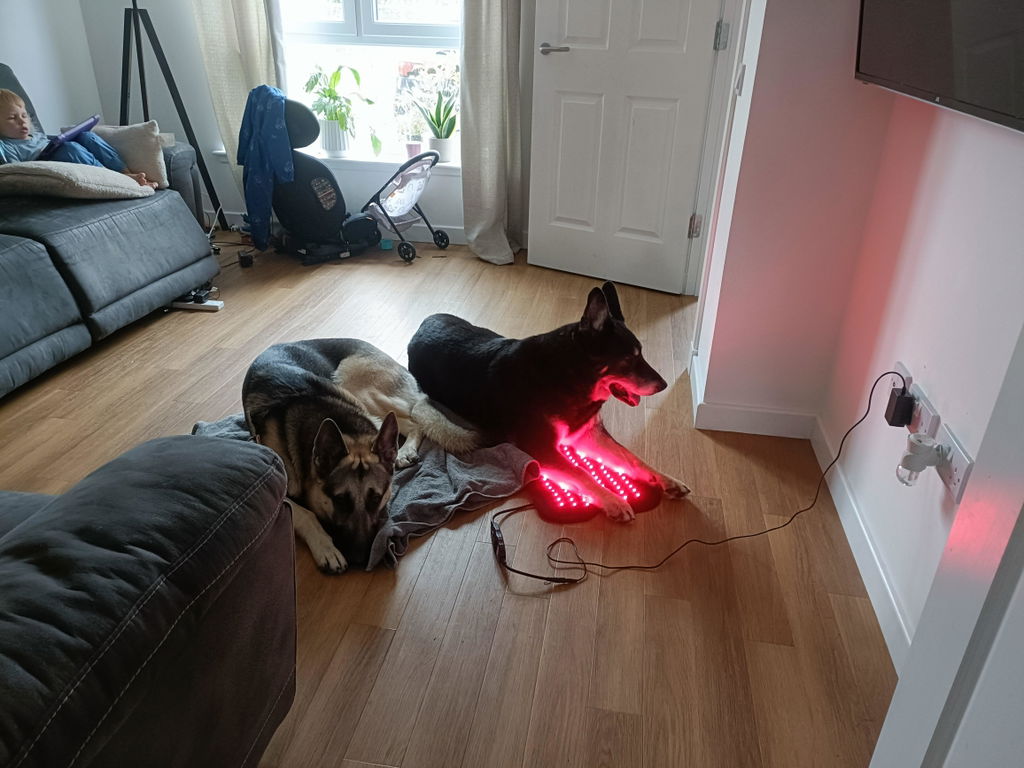
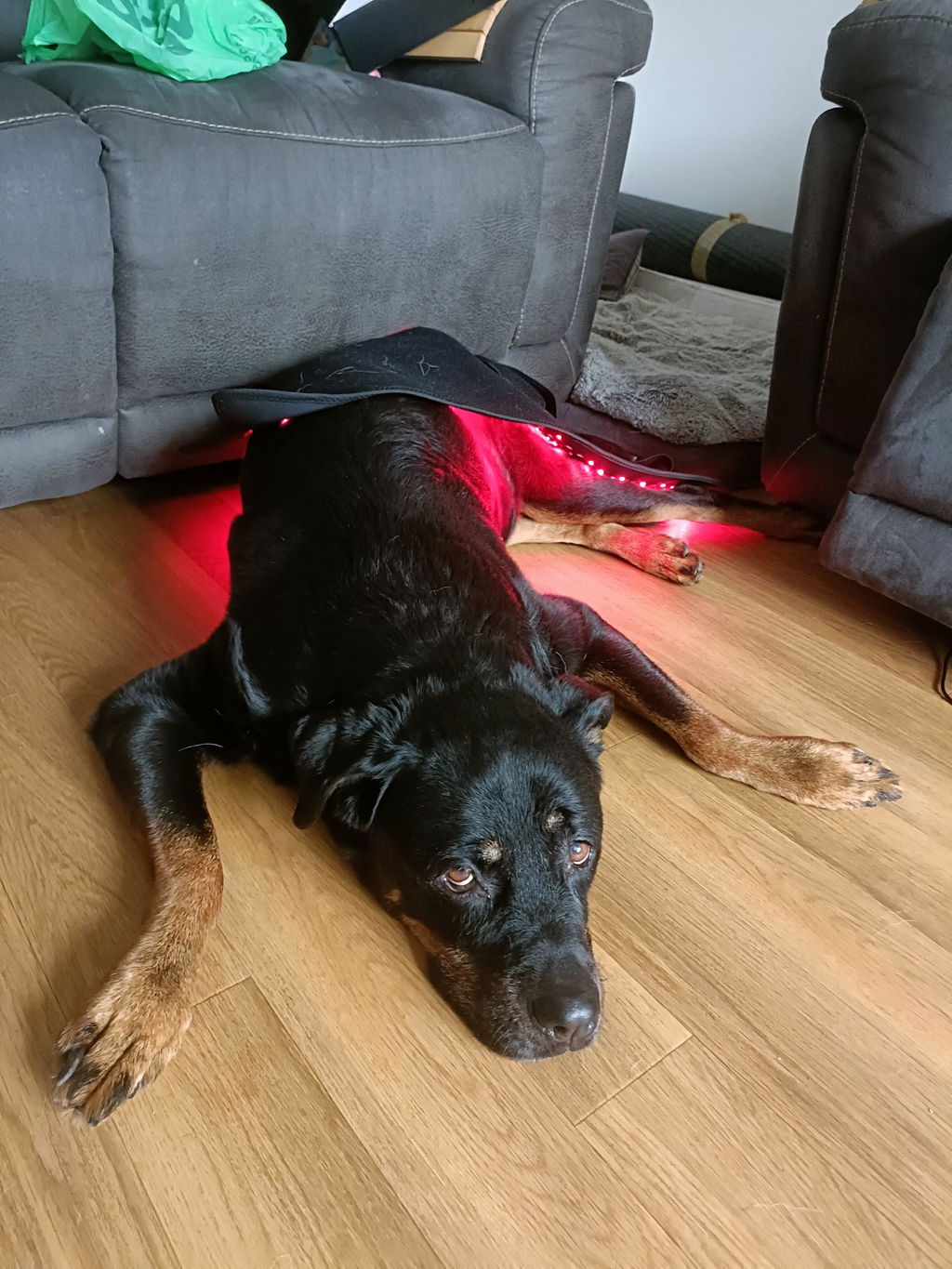
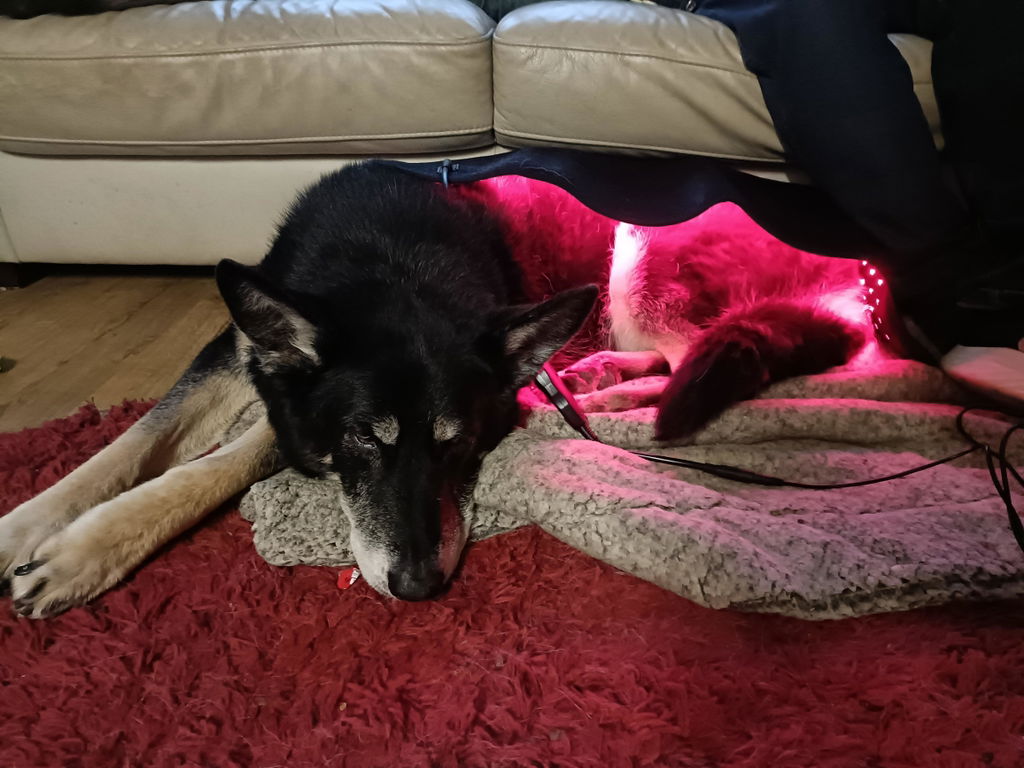
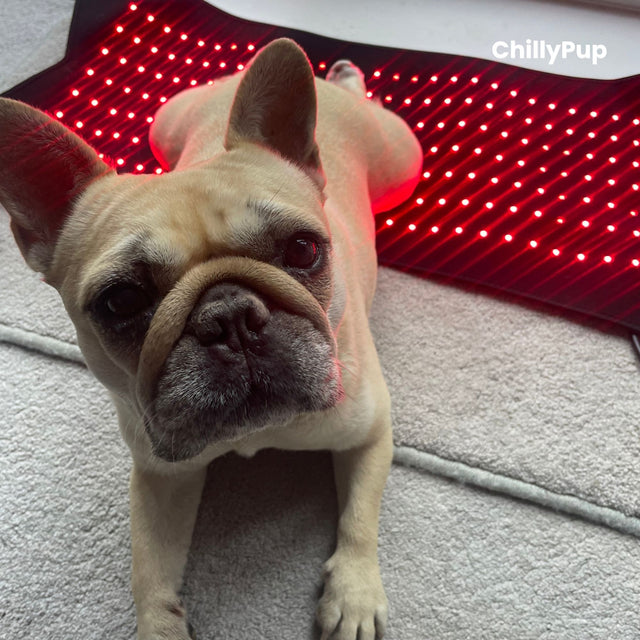
Red light is not a fix for weak back legs and never replaces a diagnosis. What it can be is a calm, comforting part of your dog's day, alongside your vet's plan. For Mila, that means her Large Pad wrapped around her every evening on the sofa, covering both back legs and hips, and the cordless Leg Wrap on her left back leg on her achier days or when we are away. We started hoping for even a 10% difference in how comfortable she felt, and we are glad we did. Consistency matters most: 10 to 15 minutes, most days.

What other owners tell us
These are real reviews left by ChillyPup customers, quoted word for word with the photos they added. Every dog is different, and you can read all of our reviews on our reviews page.
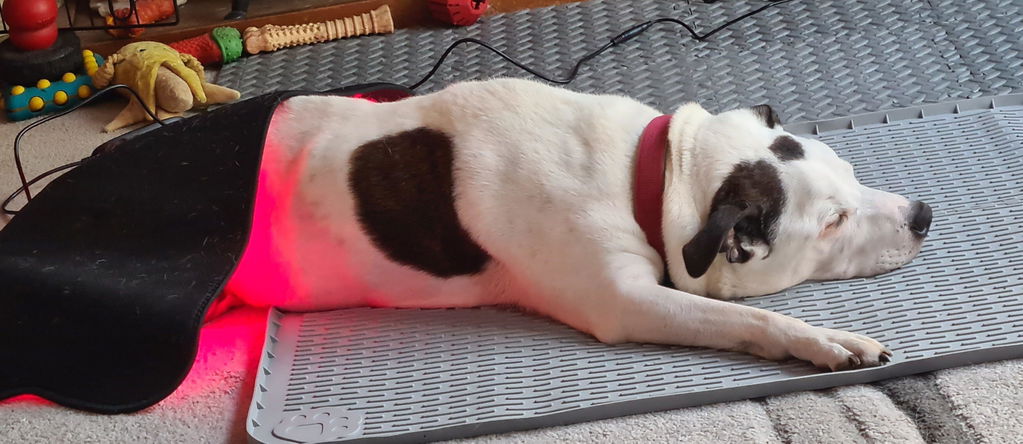
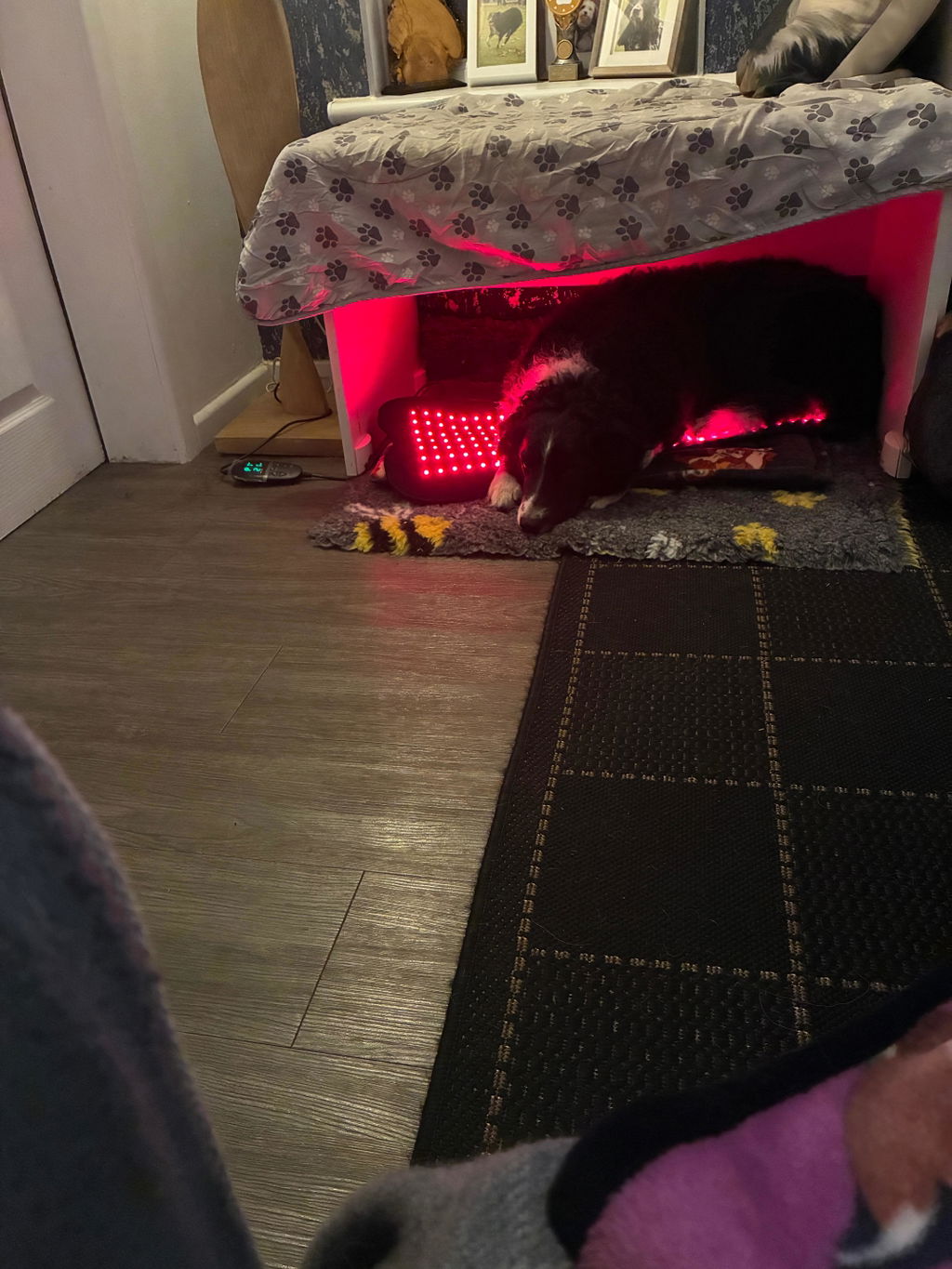
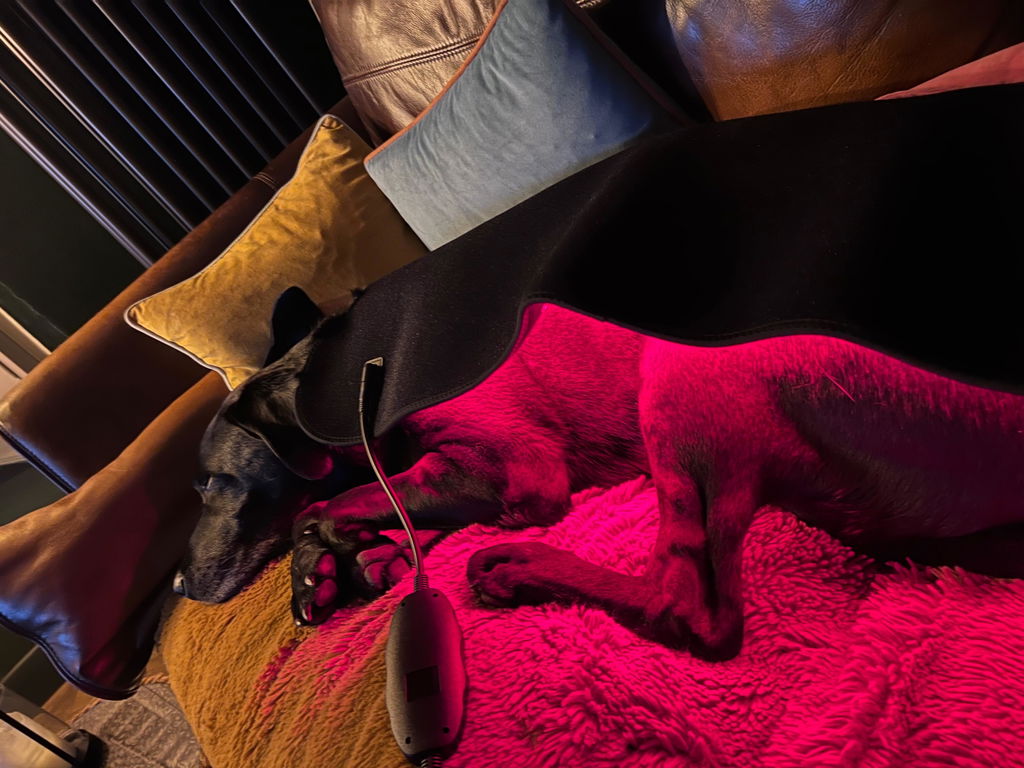
“hoping will help Alfie , our 15 year old staffy's rear legs/hips. Managed eventually to gently place it over his back while sleeping and he seemed fine with it, long may it continue.”
Bruce, Customer review, September 2026. About Alfie, his 15-year-old Staffy. Large Red Light Therapy Pad
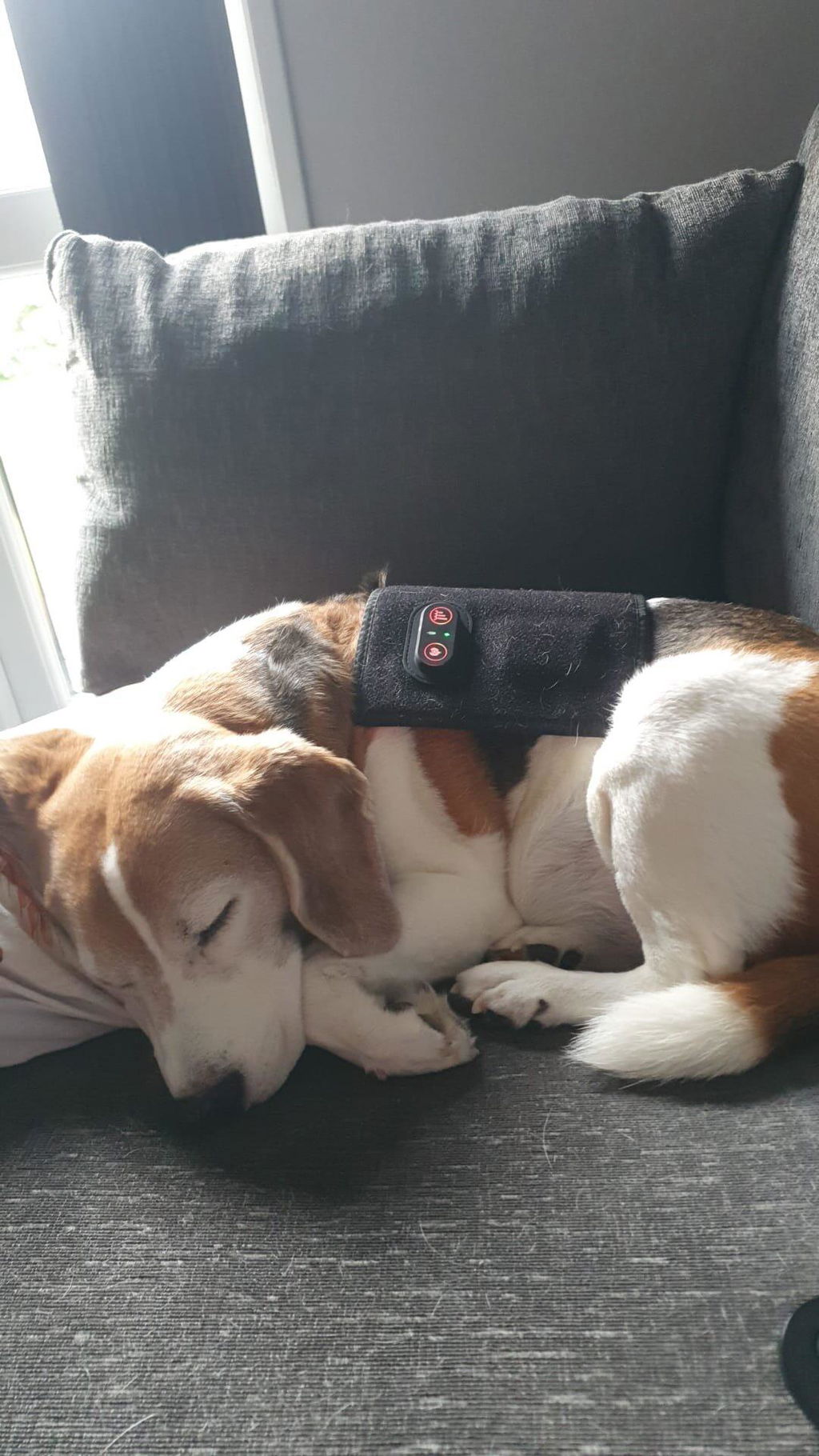
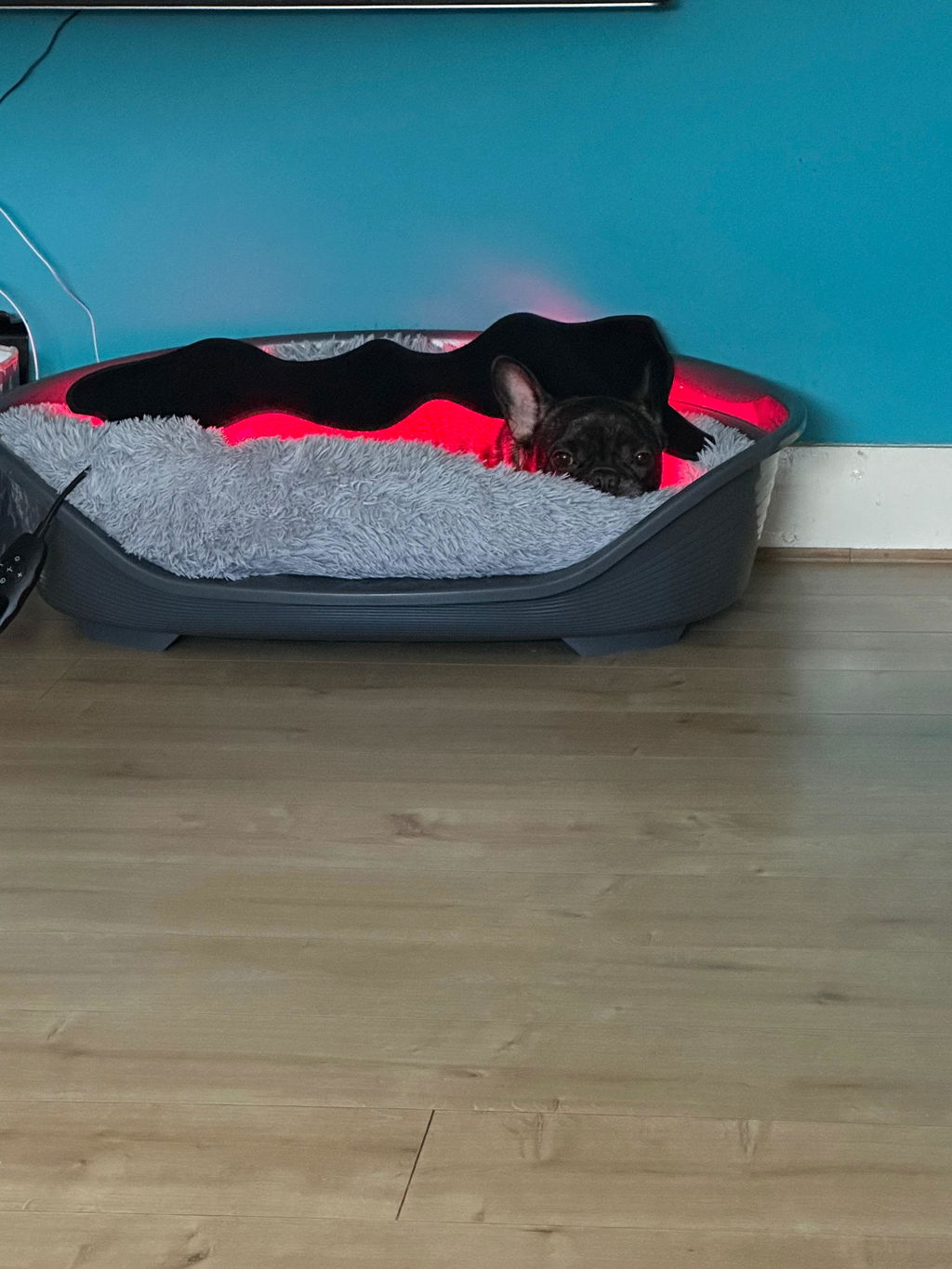
“my 13 year old beagle has been suffering with arthritis in his back legs. ... Charlie loves his pad time, and has had no issues getting used to it.”
Sophie Burgess, Verified buyer, October 2026. About Charlie, her 13-year-old Beagle. Medium Cordless Pad
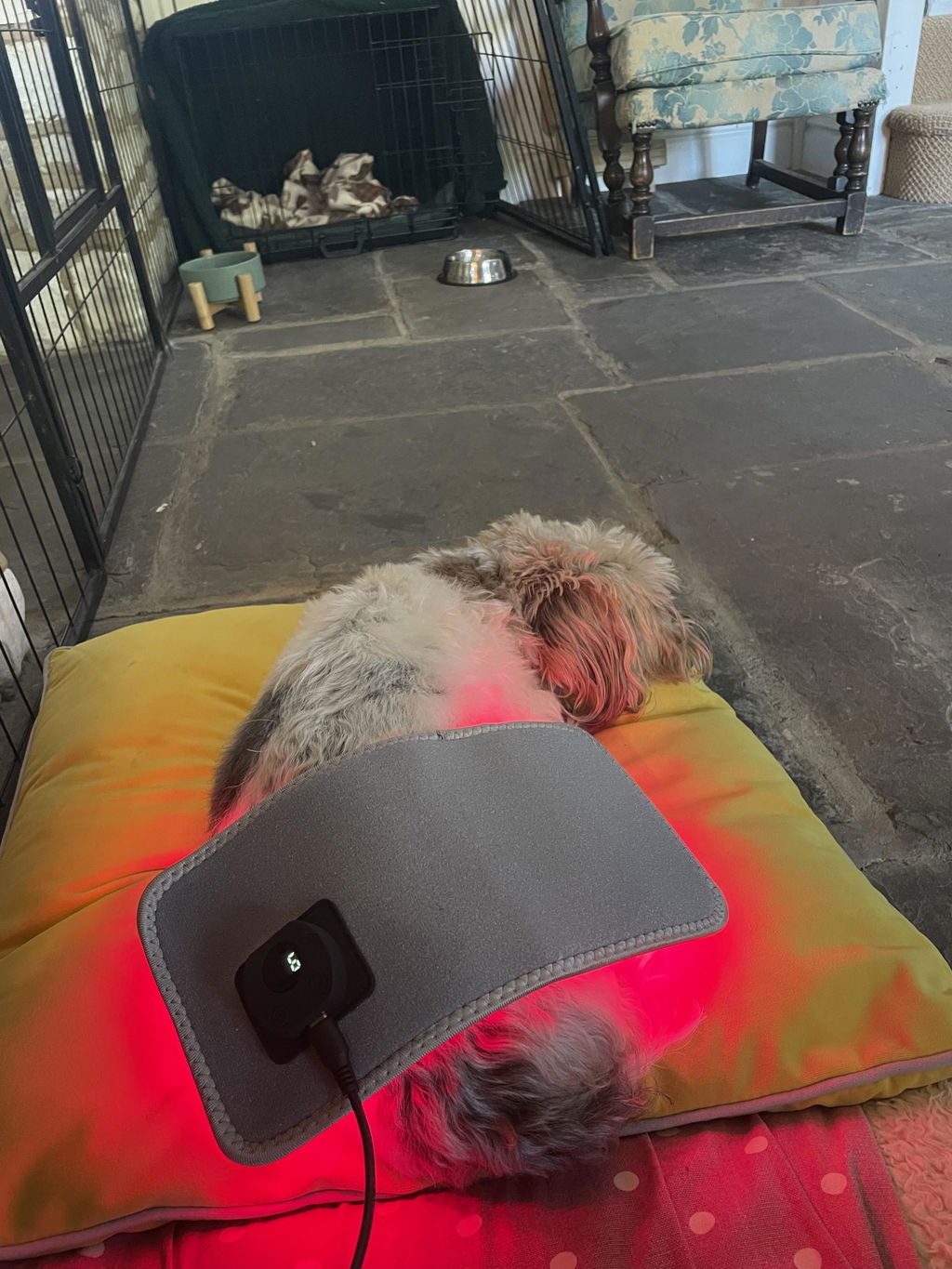
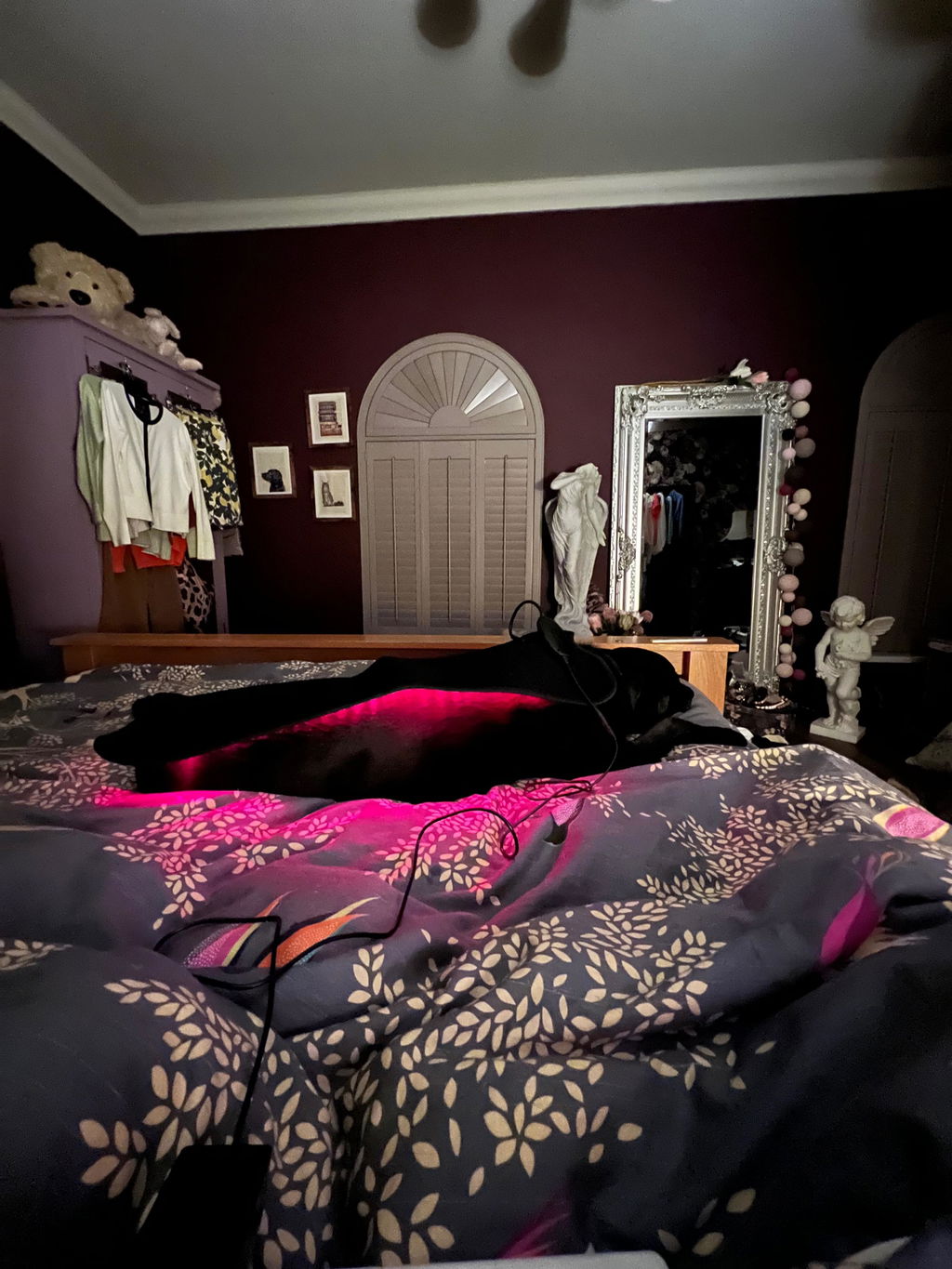
“Our JR is recovering from IVDD, he has weakness in his hind legs ... He is very relaxed with it strapped over his back area when he's resting.”
Charlotte Arnold, Verified buyer, May 2026. About her Jack Russell. Small Cordless Pad
Which product suits weak back legs?
| Product | Best for | Good to know |
|---|---|---|
| Large Pad | Both back legs, hips and lower back at once | 68cm x 33cm, 210 LEDs, five power settings, up to 124.1 mW/cm² |
| Leg Wrap | One back leg, around the knee | Cordless, fits legs 14cm to 28cm around, 15-minute auto-off |
| Medium Cordless Pad | Hips or lower back, strapped in place | Cordless, 60 LEDs, up to 89 mW/cm², 20-minute auto-off |
| Small Cordless Pad | Smaller dogs, or one specific spot | Cordless, 60 LEDs, long and short straps included |
Not sure which suits your dog? Try our fit finder, or get in touch and tell us about your dog.
Frequently asked questions
Is it just old age?
Age plays a part, but weak back legs usually have a cause that can be helped, such as arthritis or a knee problem. It is always worth a vet check rather than putting it down to getting older.
Why do my dog's back legs slide out on the floor?
Often a mix of weaker muscles, stiff joints and slippery floors. Rugs, short nails and trimmed paw fur help straight away, and your vet can check what is behind it.
Can weak back legs get better?
It depends on the cause. Many dogs become more comfortable and confident with the right plan from their vet, weight control, steady exercise and physio. Some conditions are managed rather than cured, as with Mila.
Is red light therapy suitable for a dog with weak back legs?
Many owners use it as a comforting part of their dog's routine. Get a diagnosis from your vet first, especially if the weakness is new or getting worse.
See what Mila uses every day
Our full red light range: pads and wraps for dogs of every size, with free tracked delivery and a 30-day money-back guarantee.
Keep reading
- Cruciate Ligament Injury in Dogs: Signs, Surgery and Why We Chose Another Path for Mila
- Arthritis in Dogs: Signs, Daily Routine and Where Red Light Fits
- Luxating Patella in Dogs: Grades, Signs and Living with Mila's Grade 4 Luxation
- Hip Dysplasia in Dogs: A UK Owner's Guide to Daily Comfort
- IVDD in Dogs: A Calm Home Routine for Dachshunds and Other Breeds
Important information
This article is written by dog owners to share general information and our own experience. It is not veterinary advice. ChillyPup products are designed to be a comforting part of your dog's daily routine and are not intended to diagnose, treat or cure any condition. Sudden weakness, dragging the back legs or loss of bladder control needs a vet the same day. Always speak to your vet about your dog's health.
References
- Anderson KL, O'Neill DG, Brodbelt DC, et al. Prevalence, duration and risk factors for appendicular osteoarthritis in a UK dog population under primary veterinary care. Scientific Reports. 2018;8:5641. doi.org/10.1038/s41598-018-23940-z
- O'Neill DG, Meeson RL, Sheridan A, Church DB, Brodbelt DC. The epidemiology of patellar luxation in dogs attending primary-care veterinary practices in England. Canine Genetics and Epidemiology. 2016;3. RVC VetCompass summary
- Taylor-Brown FE, Meeson RL, Brodbelt DC, et al. Epidemiology of cranial cruciate ligament disease diagnosis in dogs attending primary-care veterinary practices in England. Veterinary Surgery. 2015. RVC VetCompass summary
- Packer RMA, Seath IJ, O'Neill DG, De Decker S, Volk HA. DachsLife 2015: an investigation of lifestyle associations with the risk of intervertebral disc disease in Dachshunds. Canine Genetics and Epidemiology. 2016;3:8. doi.org/10.1186/s40575-016-0039-8