

Arthritis in Dogs: Signs, Daily Routine and Where Red Light Fits

In short
- Arthritis (osteoarthritis) is the slow wearing of a joint, and it is one of the most common reasons older dogs slow down.
- UK vets diagnose it in around 200,000 dogs a year, and researchers believe the real number is higher because early signs are easy to miss.
- Stiffness after rest, slower walks and hesitating at the stairs are often the first signs.
- Weight, steady exercise, a comfortable home and your vet's plan are the foundations. A calm daily comfort routine sits alongside them.
- Our Frenchie Mila has arthritis. Below is her real evening routine, and what the owners of an older Labrador, a 13-year-old Beagle and more have told us.
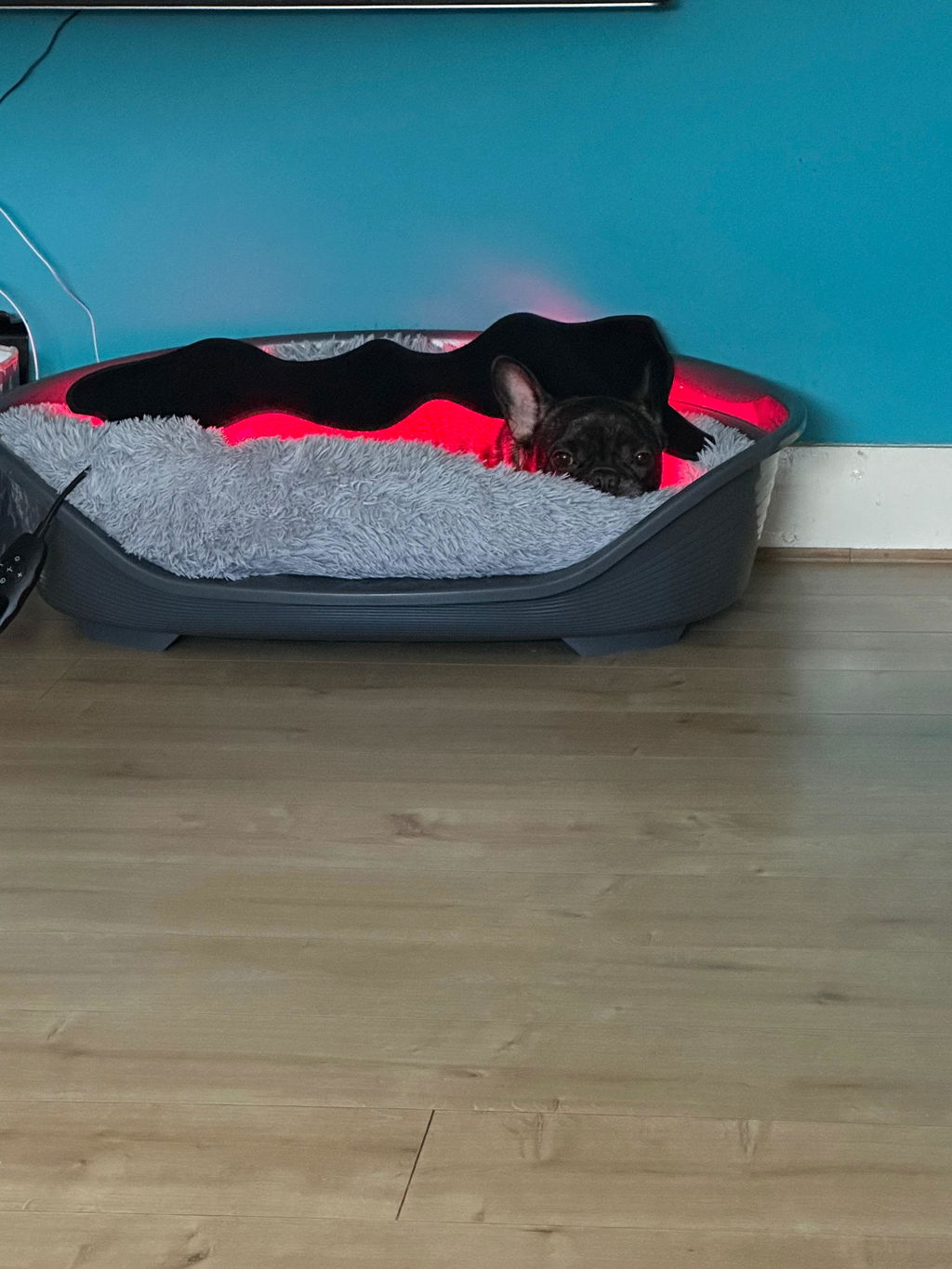
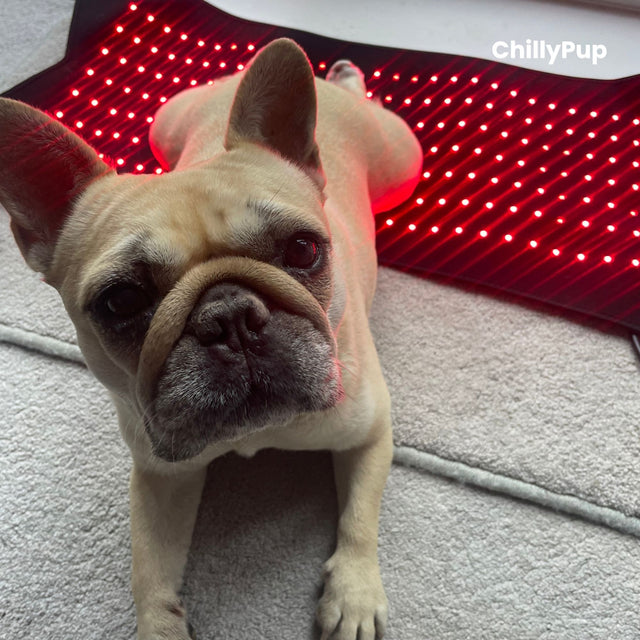
Mila is our 8-year-old French Bulldog. She has arthritis, a grade 4 luxating patella and a snapped cruciate ligament in her left back leg, and she is still the most adventurous member of the family. We chose to manage her knee rather than operate, and we explain why in our article on cruciate injuries. Arthritis has not stopped her doing what she loves, but it has changed how we look after her, especially on cold mornings and after a busy day.
This guide covers how to spot arthritis, what usually helps and how we fit red light into Mila's evenings. We are dog owners, not vets, so anything about diagnosis, medication or treatment is a conversation for your vet.
Shop the red light rangeFind the right fit
What is arthritis in dogs?
Osteoarthritis is a gradual change in a joint. The smooth cartilage that cushions the ends of the bones wears down, the joint lining becomes irritated and the joint gets stiffer and sorer over time. It most often affects the hips, elbows, knees and shoulders, and it can also affect the spine. It is not only an old dog problem: dogs with hip dysplasia, elbow problems or a luxating patella can develop it much younger.
How common is arthritis in UK dogs?
A study of over 455,000 dogs under UK vet care found that 2.5% had a diagnosis of limb arthritis in a single year, roughly 200,000 dogs across the UK.[1] The researchers called this a conservative figure: early signs are often put down to "just getting older", so many dogs live with arthritis before it is ever diagnosed. In dogs where the study could measure it, arthritis affected around 11% of their whole lifespan.[1]
Dogs over 12 were by far the most likely to be diagnosed, and dogs at or above the average weight for their breed had more than twice the odds of dogs below it.[1] Larger breeds such as Rottweilers, Labradors, Golden Retrievers and German Shepherds were more likely to be affected, but any dog can develop it.[1]
Early signs worth noticing
- Slow to get up after a rest, or stiff first thing in the morning
- Stiffness that eases after a few minutes of moving
- Hesitating before the stairs, the car or the sofa
- Shorter walks, lagging behind or wanting to turn for home
- Less interest in play
- Licking at a particular joint
- Grumpier than usual when touched in certain places
- Stiffer on cold, damp days
Speak to your vet if you notice:
- Any of the signs above, especially if they are getting more frequent
- A new or worsening limp
- Your dog crying out, or not wanting to move at all
A short video of your dog walking or getting up is really useful to show your vet.
What usually helps
Arthritis cannot be cured, but a lot can be done to keep dogs comfortable and active. In the UK study, around 85% of diagnosed dogs had at least one form of treatment from their vet.[1] Alongside your vet's plan, these are the everyday basics:
- A healthy weight. The single biggest thing most owners can change.
- Little and often. Regular, steady walks rather than one long weekend outing.
- Hydrotherapy or physiotherapy, ideally through a centre your vet recommends.
- Grip underfoot. Rugs and runners on wooden and tiled floors.
- Ramps and steps for the car, sofa and bed.
- Warmth. A thick bed away from draughts, and a coat on cold, wet walks.
- A calm daily comfort routine that suits your dog, which for Mila includes red light.
Mila's evening routine
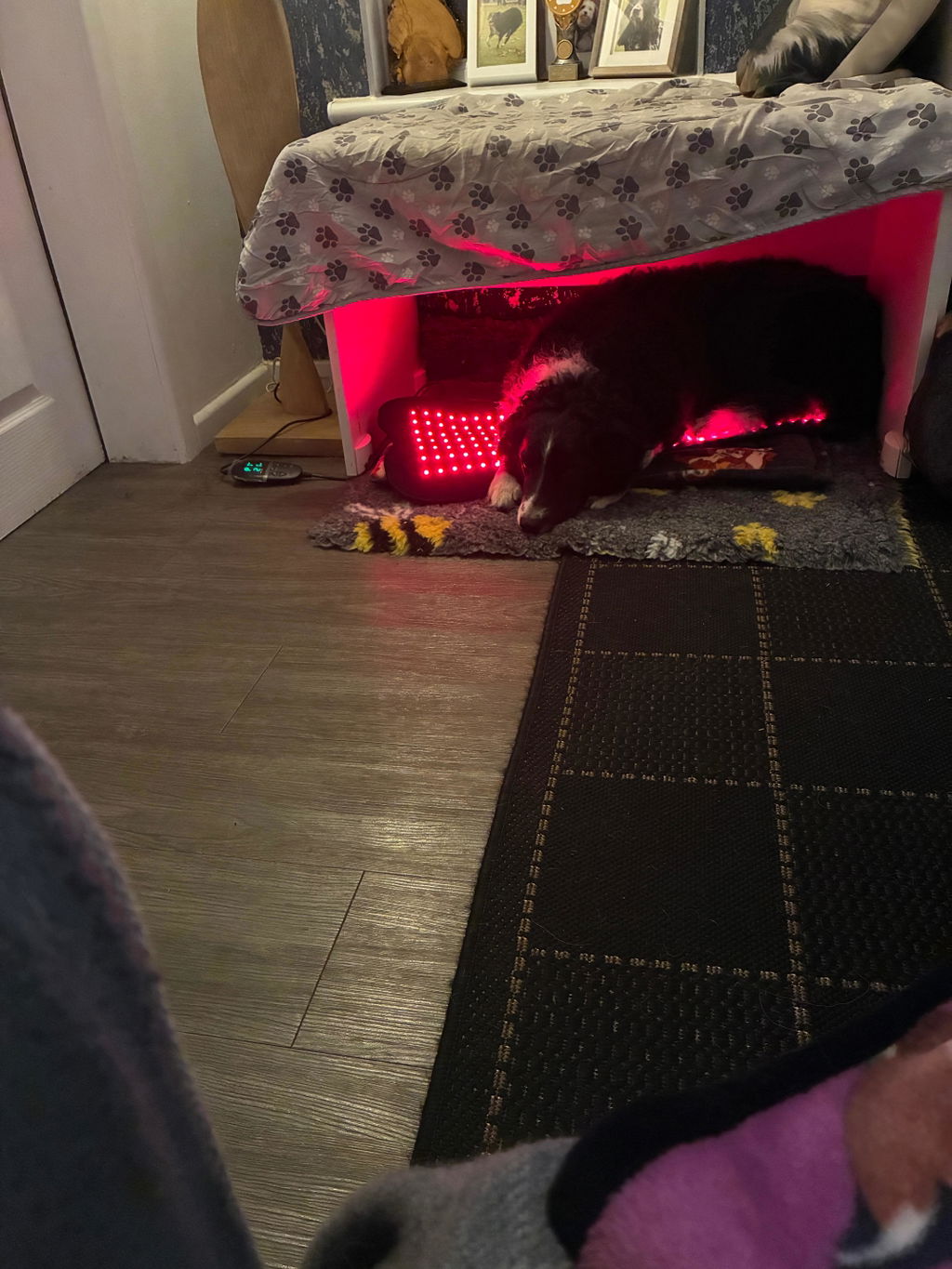
We started red light therapy with Mila hoping it might make even a 10% difference to how comfortable she felt. It is not a miracle and we would never call it one, but we are genuinely glad we tried, and her evening session has become one of the calmest parts of our day.
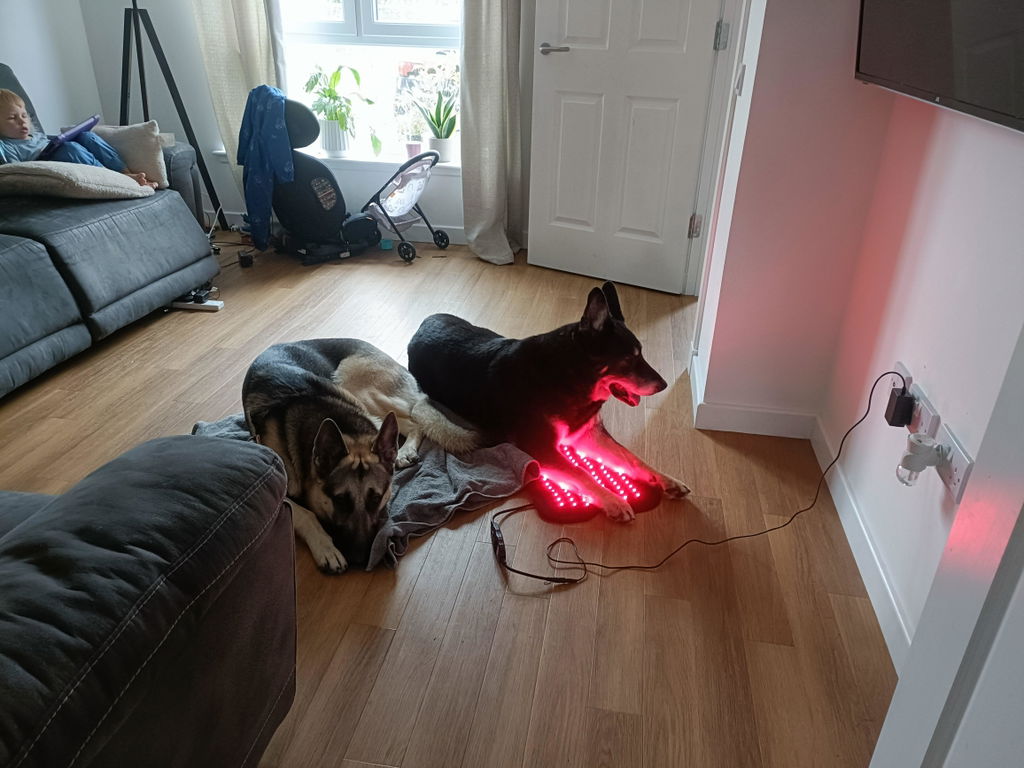
Every evening, when we are settled watching TV and she is at her most relaxed, Mila has her Large Red Light Therapy Pad wrapped around her on the steady Constant light setting. She is on P1 or P2 most days, and up to P5 on her stiffer days. She is usually asleep within minutes and happily sleeps through the full 15 to 20 minutes.
On days when one area is clearly bothering her, she has the Small Cordless Pad on just that spot. On really achy days, or when we are away from home, she wears the Leg Wrap on her left back leg instead. She never has them all at once: one product, one calm session.

What does the research say?
Light therapy has been studied in dogs with arthritis, using clinical lasers in veterinary settings. In a controlled trial of 20 dogs with elbow arthritis, published in the Canadian Veterinary Journal, dogs given six weeks of light therapy had better lameness and pain scores than dogs given a dummy treatment, and 9 of the 11 treated dogs were able to have their anti-inflammatory dose reduced by the study team, compared with none of the 9 in the comparison group.[2] A 2022 trial in dogs with hip arthritis also found better pain and mobility scores with clinical laser therapy than with a standard anti-inflammatory course.[3]
These studies used clinical equipment, not home devices, and small numbers of dogs, so we would never claim the same results from ours. They are part of why so many UK vets now offer light therapy, and why owners like us want something gentle they can keep up every day at home. Never change your dog's medication without your vet.
What other owners tell us
These are real reviews left by ChillyPup customers, quoted word for word with the photos they added. Every dog is different, and you can read all of our reviews on our reviews page.
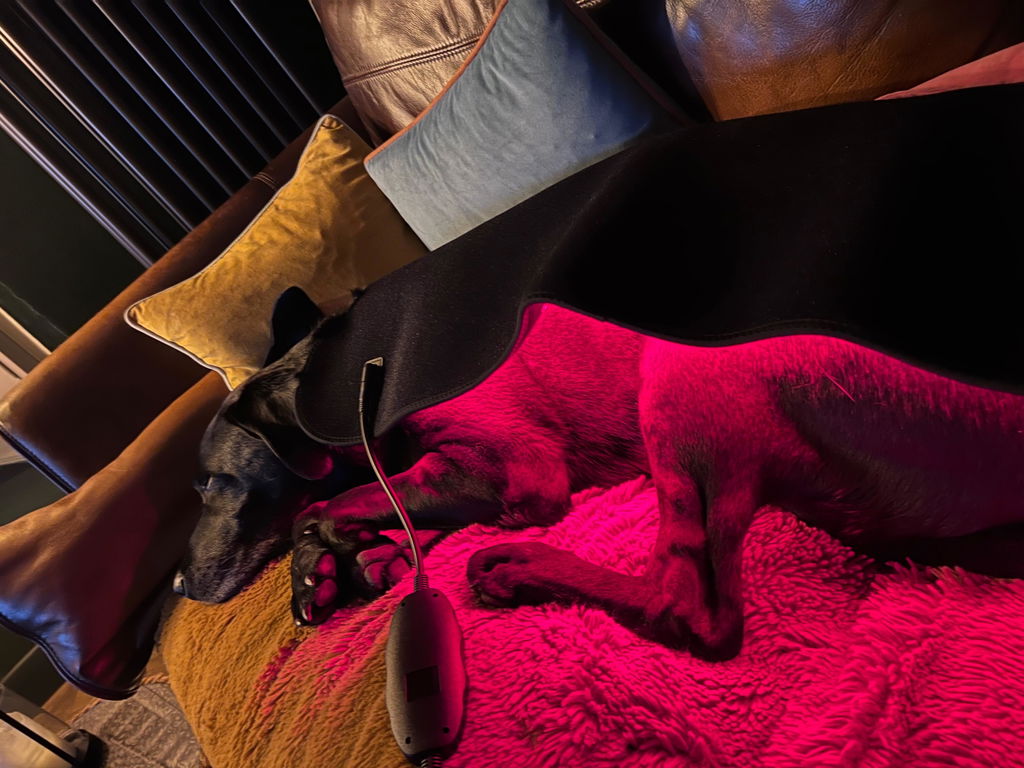
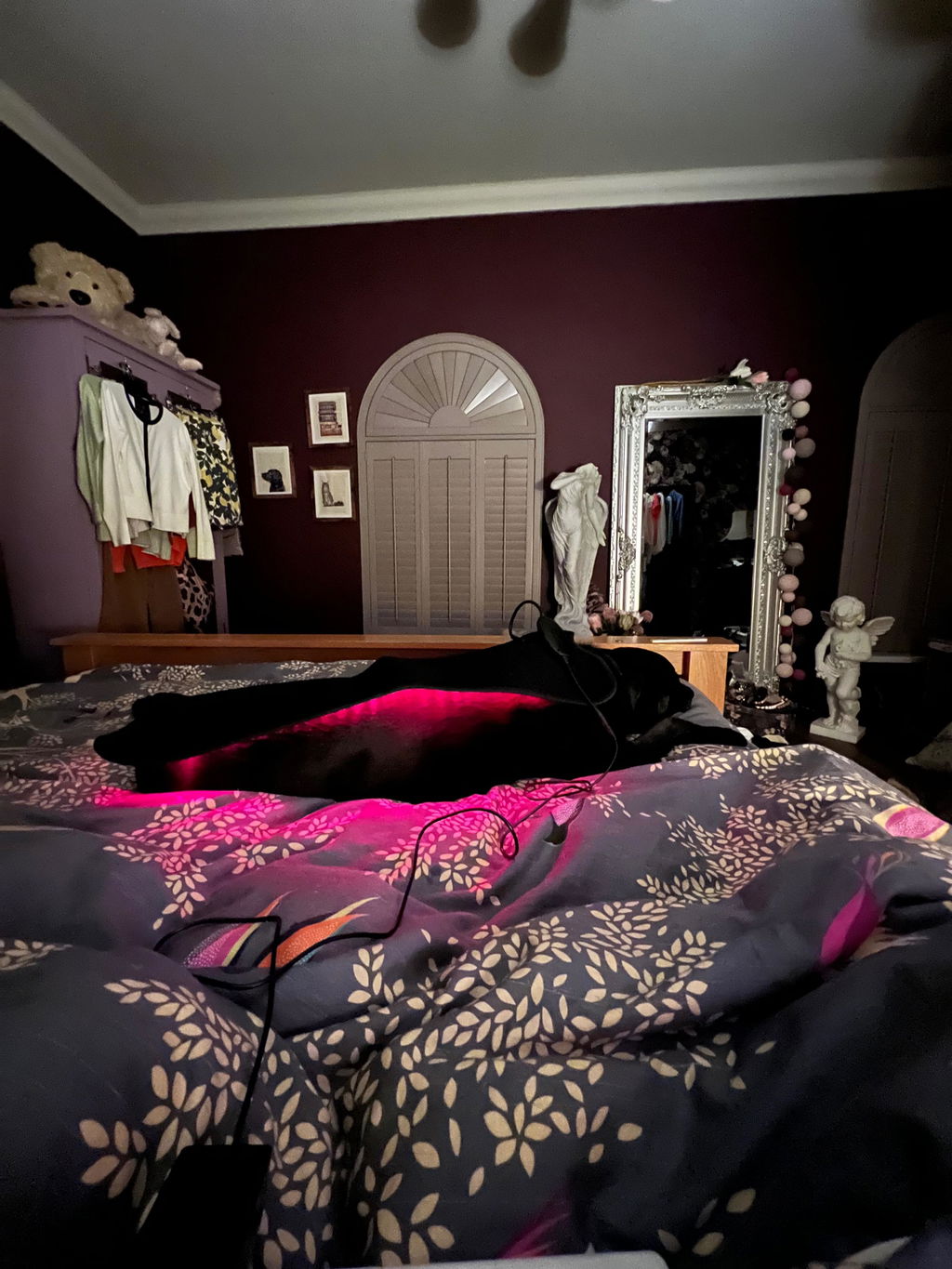
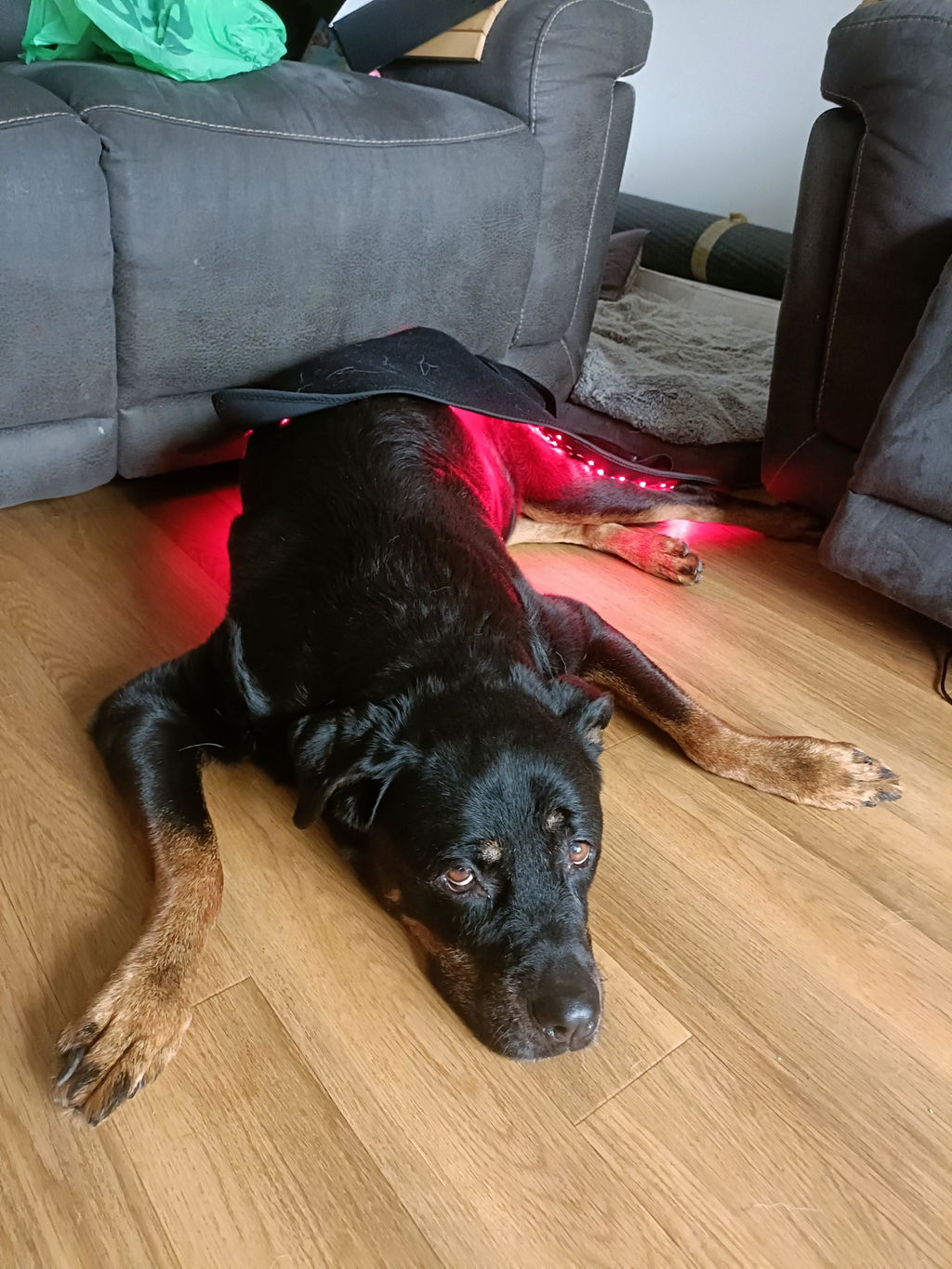
“Murphy has 30 minutes under it every evening and, rather surprisingly, he genuinely seems to enjoy his “blanket time”! He settles down happily and it has become part of our nightly routine. ... Obviously his red light therapy is only one part of managing his arthritis”
Stella K, Verified buyer, October 2026. About Murphy, her 11-year-old Labrador with spinal arthritis. Large Red Light Therapy Pad
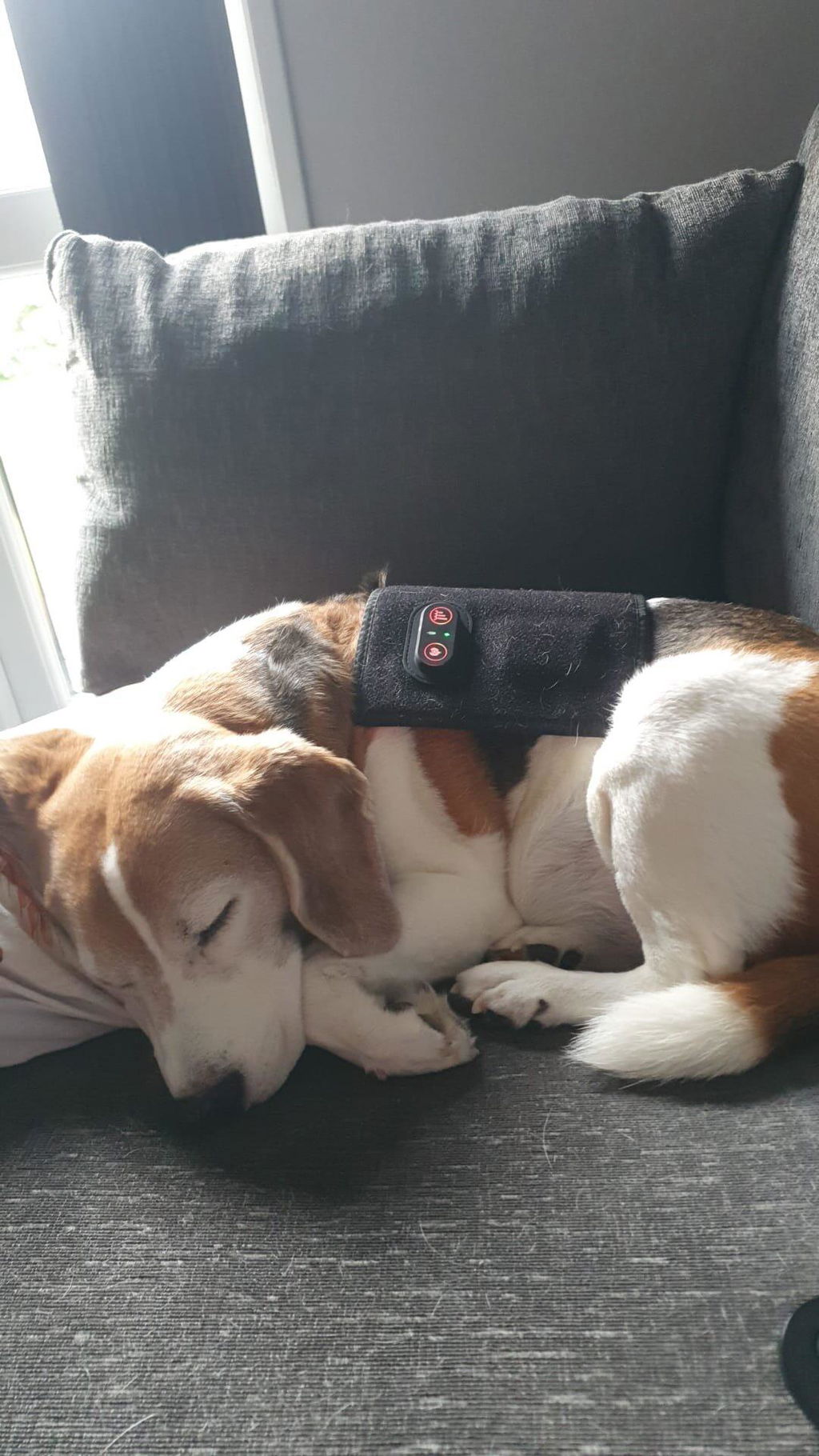
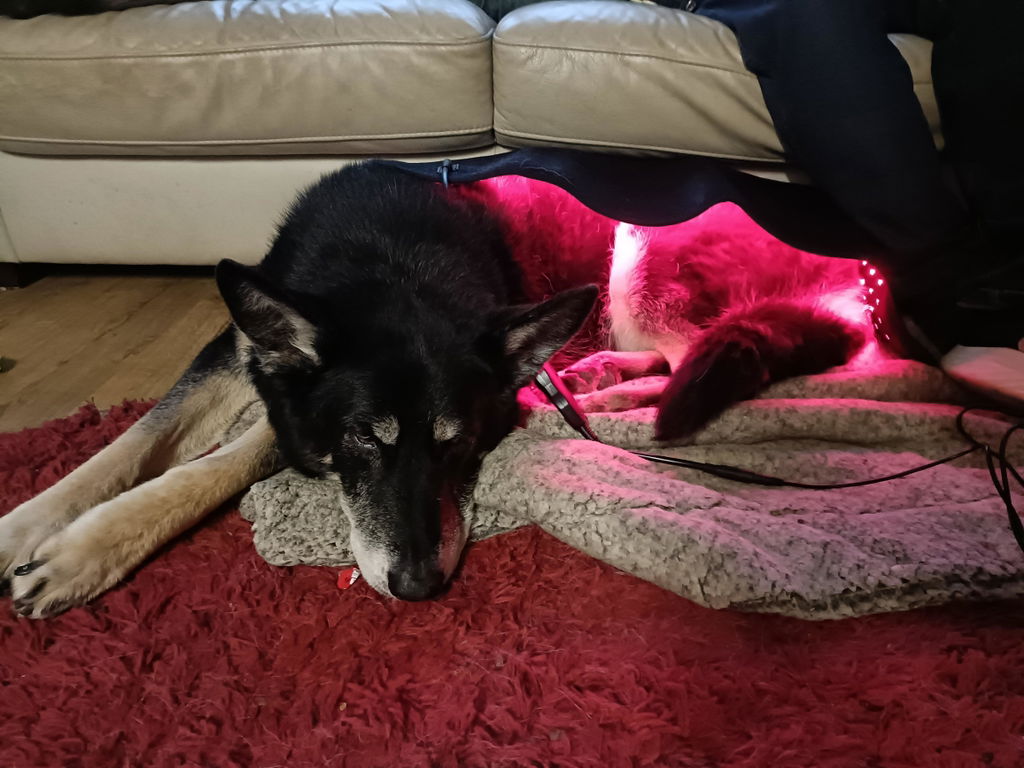
“my 13 year old beagle has been suffering with arthritis in his back legs. ... Charlie loves his pad time, and has had no issues getting used to it.”
Sophie Burgess, Verified buyer, October 2026. About Charlie, her 13-year-old Beagle. Medium Cordless Pad
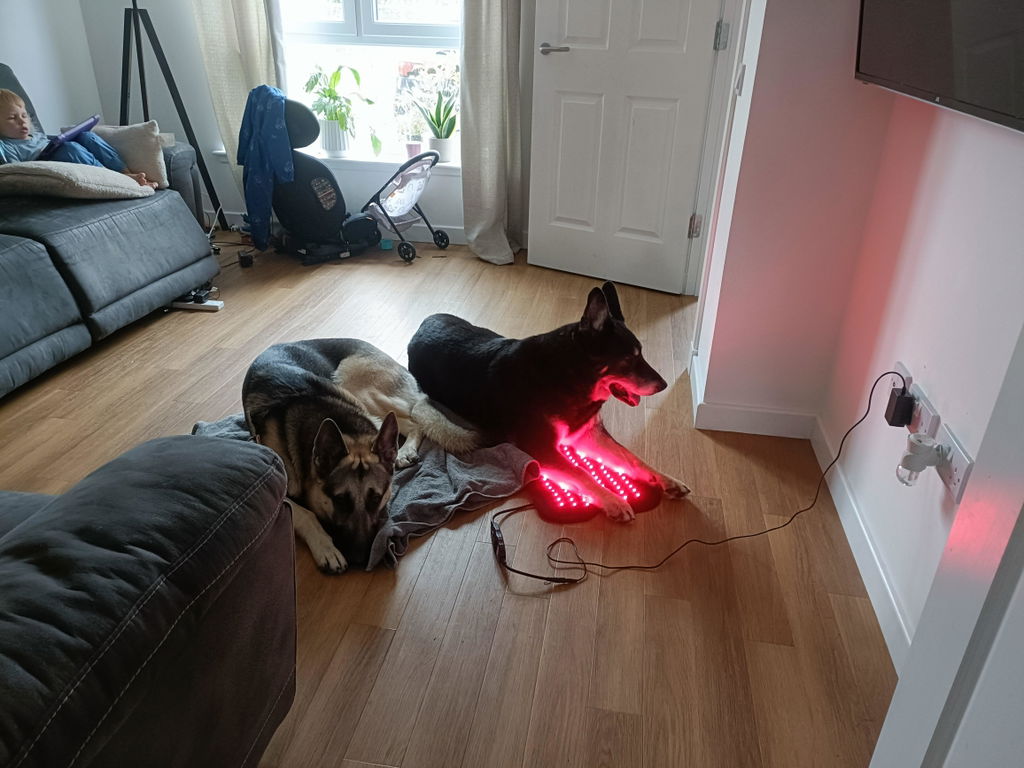
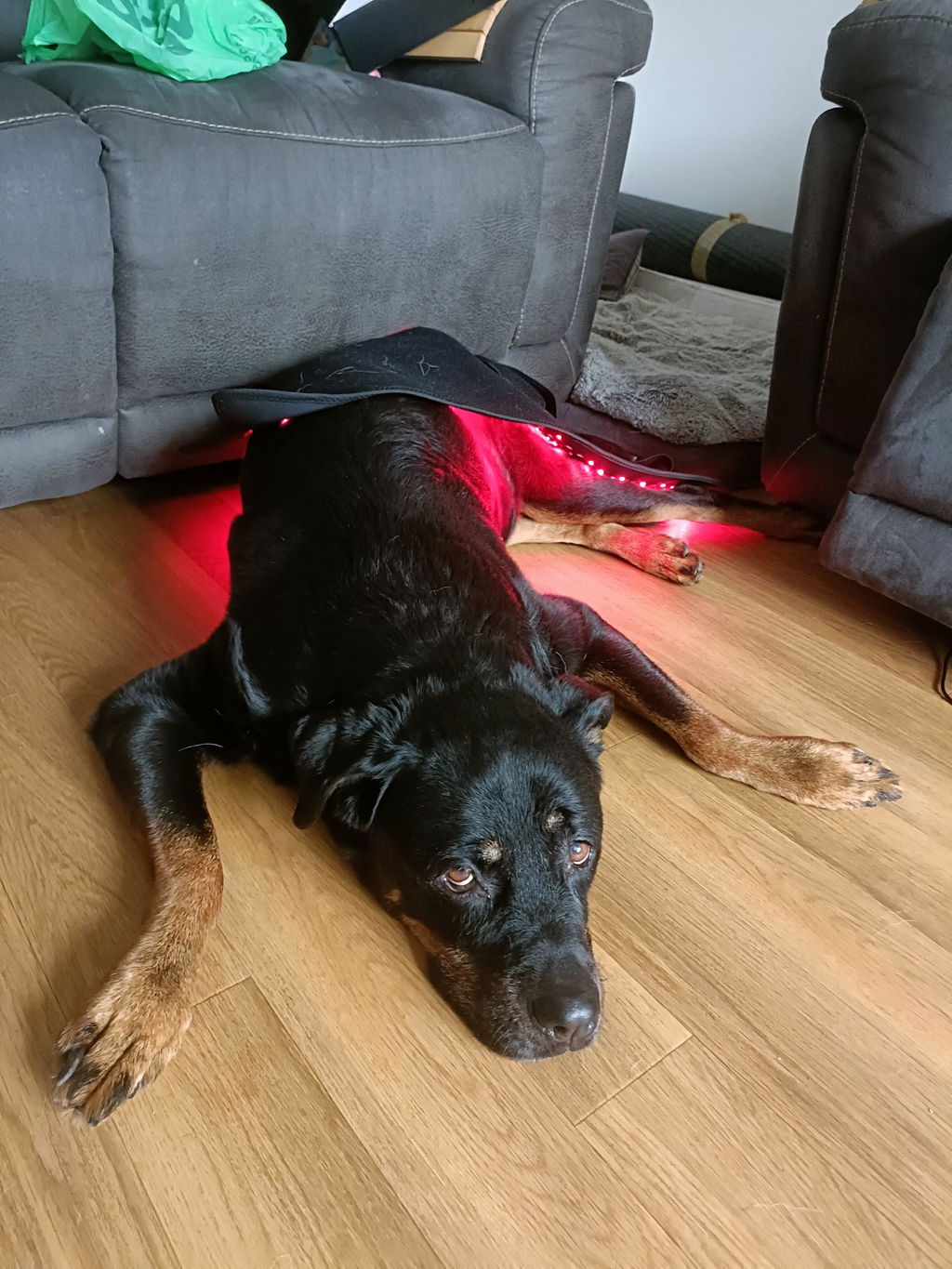
“Bought for alba who is almost 14. ... when i put it on my brothers rottie roxy that alba got upset. They have learned to share.”
Janice, Verified buyer, September 2026. About Alba, who is almost 14. Large Red Light Therapy Pad
Which product suits a dog with arthritis?
| Product | Best for | Good to know |
|---|---|---|
| Large Pad | A full-body evening routine, hips, back and shoulders | 68cm x 33cm, 210 LEDs, five power settings, up to 124.1 mW/cm² |
| Medium Cordless Pad | One area at a time, strapped in place, no cable | Cordless, 60 LEDs, up to 89 mW/cm², 20-minute auto-off |
| Small Cordless Pad | Smaller dogs, or one specific spot | Cordless, 60 LEDs, long and short straps included |
| Leg Wrap | Knees, elbows and legs | Cordless, fits legs 14cm to 28cm around, 15-minute auto-off |
Not sure which suits your dog? Try our fit finder, or get in touch and tell us about your dog.
Frequently asked questions
At what age do dogs get arthritis?
It becomes much more common with age, especially over 12,[1] but dogs with joint conditions such as hip dysplasia or a luxating patella can develop it much younger.
Is arthritis worse in winter?
Many owners, us included, notice their dogs are stiffer on cold, damp days. A warm bed, a coat on wet walks and a slightly longer warm-up at the start of a walk all help.
Can I use red light therapy alongside my dog's medication?
Many owners do, but always check with your vet first, and never reduce or stop medication on your own.
How long before we notice anything?
Every dog is different. What we have learned with Mila is that consistency matters most: 10 to 15 minutes, most days, over weeks and months, rather than long occasional sessions.
Is red light therapy safe to use every day?
Our products are designed for regular home use, with built-in timers or auto-off on the cordless products. Keep the light away from your dog's eyes, avoid open wounds, and follow our user guide. If your dog has a diagnosed condition, check with your vet first.
See what Mila uses every day
Our full red light range: pads and wraps for dogs of every size, with free tracked delivery and a 30-day money-back guarantee.
Keep reading
- Cruciate Ligament Injury in Dogs: Signs, Surgery and Why We Chose Another Path for Mila
- Why Are My Dog's Back Legs Weak? Causes, When to Worry and How to Help
- Luxating Patella in Dogs: Grades, Signs and Living with Mila's Grade 4 Luxation
- Hip Dysplasia in Dogs: A UK Owner's Guide to Daily Comfort
- IVDD in Dogs: A Calm Home Routine for Dachshunds and Other Breeds
- Red Light Therapy for Dogs: A Dog Owner's Guide
Important information
This article is written by dog owners to share general information and our own experience. It is not veterinary advice. ChillyPup products are designed to be a comforting part of your dog's daily routine and are not intended to diagnose, treat or cure any condition. Research mentioned here used clinical equipment in veterinary settings, not ChillyPup products. Always speak to your vet about your dog's health, and never change your dog's medication without their advice.
References
- Anderson KL, O'Neill DG, Brodbelt DC, et al. Prevalence, duration and risk factors for appendicular osteoarthritis in a UK dog population under primary veterinary care. Scientific Reports. 2018;8:5641. doi.org/10.1038/s41598-018-23940-z
- Looney AL, Huntingford JL, Blaeser LL, Mann S. A randomized blind placebo-controlled trial investigating the effects of photobiomodulation therapy (PBMT) on canine elbow osteoarthritis. Canadian Veterinary Journal. 2018;59(9). Study summary
- Alves JC, Santos A, Jorge P, Carreira LM. A randomized double-blinded controlled trial on the effects of photobiomodulation therapy in dogs with osteoarthritis. American Journal of Veterinary Research. 2022. doi.org/10.2460/ajvr.22.03.0036